

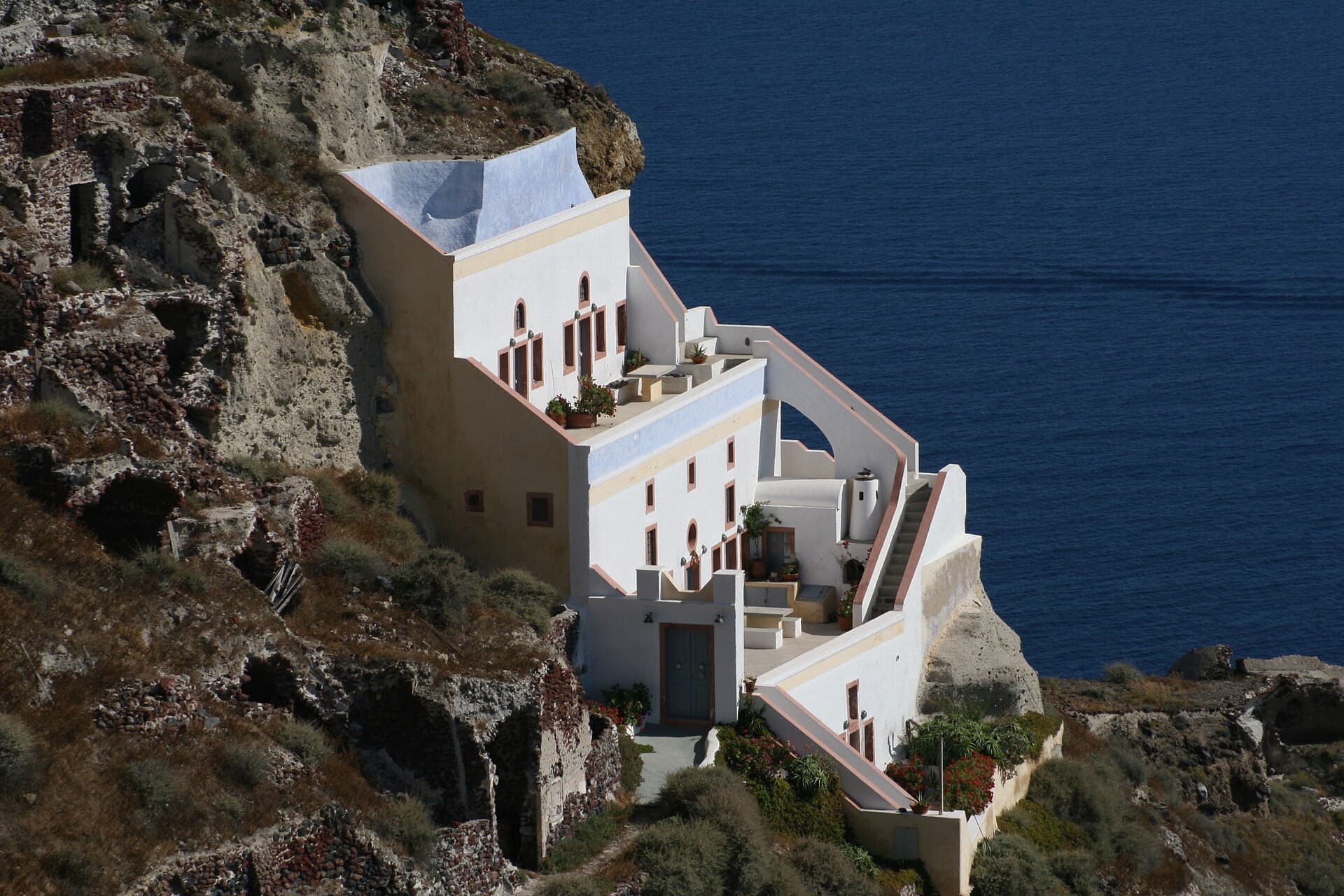
Bodrum's dramatic coastline presents a unique challenge for natural stone: the combination of intense UV exposure, salt spray, and high humidity degrades most materials within a few seasons. SO? Architecture, a firm renowned for their contextual Aegean designs, specified Verde Cipollino for the villa's interior walls and Travertine Silver for its extensive outdoor terraces.
Verde Cipollino is a Greek marble from the quarries of Tinos, characterized by deep green bands interlayered with white calcite veins. Its name derives from its resemblance to the cross-section of a leek (cipolla in Italian). The stone's density and low porosity make it exceptionally resistant to the moisture and temperature swings of coastal environments. We selected blocks from the deeper seams of the Tinos quarry, where the green coloration is most concentrated and the veining most pronounced.
For the exterior, Travertine Silver was chosen for its natural non-slip surface and thermal performance. Unlike many travertines that darken with exposure, Silver Travertine — sourced from the Denizli basin in southwestern Turkey — develops a subtle silver-gray patina over time while maintaining its cool surface temperature even under direct August sun. The client walked barefoot on sample panels for three days before approving the selection.
The project's structural challenge was the integration of stone cladding on curved exterior walls that followed the cliff's organic contours. Each Travertine panel was water-jet cut to precise radii, with the vein orientation maintained across adjacent pieces. The interior Verde Cipollino was installed using a concealed mechanical anchoring system to preserve the illusion of monolithic stone walls.
Since completion, thermographic surveys have confirmed that the Travertine terraces remain an average of 8°C cooler than the ambient air temperature during peak summer, contributing significantly to the villa's passive cooling strategy.
The stone had to survive bare feet, salt air, and August sun.
— SO? Architecture