

The Name
Behind the Name.
Before there was a company, there was a woman — and her name was DIJA. This is our story.
The Name Behind the Name
Before there was a company, there was a woman.
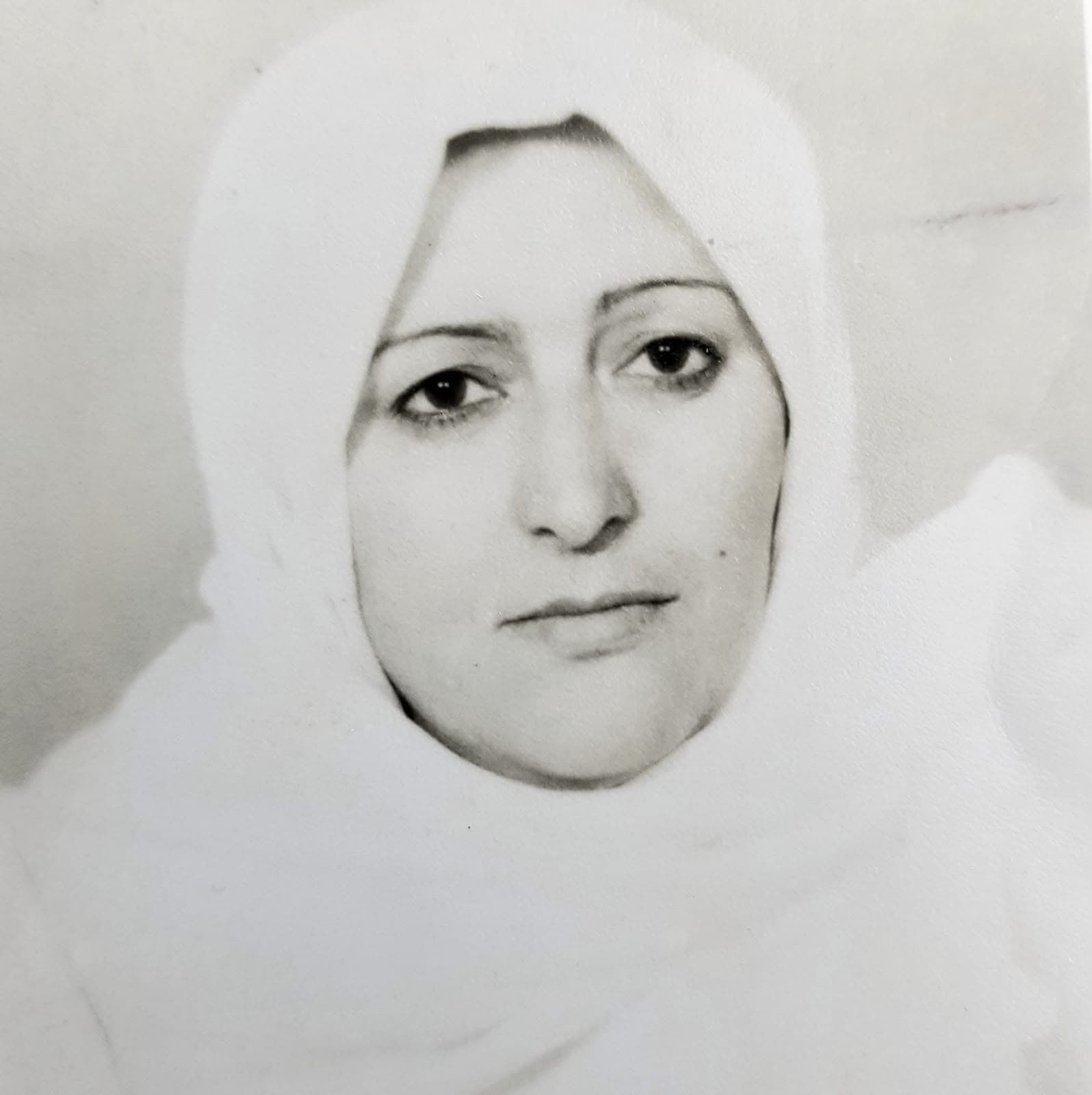
Khadija — the grandmother of our founders — was not in the stone trade. She never read a geological survey or negotiated a quarry contract. But she understood something no textbook teaches: that beauty only lasts when it is built on honesty. She raised her family on the belief that a person's word is worth more than anything they own. She didn't lecture about integrity — she lived it, in the way she kept her home, welcomed every guest, and stood by what she said.
When it came time to name this company, only one name fit. DIJA is her name, carried forward — and a promise that everything we source and ship honors the values she gave us: beauty with integrity, ambition with honesty, and a word that stands as a bond.
This is the story of how those values became the foundation of a company that supplies architects, developers, and homeowners around the world.
The Genesis of an Obsession
Before the first quarry visit, there was a drafting table. The founders of DIJA grew up around an architect — their mother — who was trusted with large, landmark projects. Her studio was their playground, where they listened to her and her peers debate spatial flow, structure, and natural light for hours. Spread across the tables were samples from the earth: bright White Calacatta, deep Red Rosso Levanto. They learned to read these marbles by their fossils and veining before they could pronounce the names. But it was limestone that stayed with them — a sample in the palm felt calm and grounding in a way no other material did. They fell for architecture as a whole: proportion, the way a facade meets its landscape, the fall of light across a matte surface, the connection between a building and the people inside it. And they came to see stone not as the star of a project, but as the material that makes the architect's vision possible — the part they wanted to get right.
The Architecture of Trust
In 2017, that passion became a profession. We immersed ourselves in Turkey's limestone trade — the storied quarries of Finike and Antalya, whose stone has shaped Mediterranean architecture for centuries. But we didn't just buy blocks; we built relationships. We learned to read the stone: how the angle of extraction changes what a slab becomes, how the right block in the wrong hands is wasted, and how the right block in the right hands becomes something exceptional. Those partnerships grew over countless cups of tea in quarry offices, long conversations about block yields, and the mutual respect that only comes from years of showing up and keeping your word. In an industry too often built on opacity, we came to believe that transparency is the real advantage.
A Decade of Curating the Earth
What followed was a steady pursuit — not of volume, but of quality. We travelled across the Mediterranean and well beyond it, building relationships with family-owned quarries from the highlands of Brazil to the ancient stone belts of India. Brazil sharpened our eye for movement and colour in exotic granites; India taught us patience and precision in processing; the Mediterranean grounded us in heritage. In an industry crowded with middlemen and anonymous suppliers, we chose the harder, slower path: direct relationships with the families who own and run the quarries. It is the lesson Khadija taught us at home, applied to business — relationships built on honesty outlast every shortcut. When you know the hands that extract the stone, you can trust what they send you.
Coming Home: The Tunisian Renaissance
In 2022, we brought our expertise home to Tunisia. We saw what much of the world had overlooked — that Tunisian natural stone has a rare combination of colour, density, and character that puts it on a path to rival the celebrated marbles of Italy. It was as much a bet on our homeland as a business decision. Like everything else, this chapter was built on family: a partnership drawing on expertise from Qatar, Tunisia, and Turkey. Today our portfolio reaches across the Mediterranean — supplying private residences, luxury resorts in the Maldives, and villas across the GCC — and every project is a chance to show that beauty and integrity travel well together.
DIJA Today
Today, DIJA operates from its headquarters in Izmir, with branches reaching across Canada, Italy, Qatar, and Tunisia. This footprint gives us access to one of the most diverse portfolios of Mediterranean-mined natural stone available anywhere in the world — granites, marbles, limestones, and travertines, each sourced directly from the family quarries we've come to know and trust. For our clients — architects, developers, and designers who share our obsession with material integrity — DIJA represents something increasingly rare: a supplier who understands stone not as inventory, but as legacy. We know the geological story behind every block. We know the families behind every quarry. We know that the projects you build with our stone will outlive all of us — which is exactly why we refuse to compromise on quality, transparency, or honesty at any step of the journey.
Where We Are Going
Our ambition is to become one of the most trusted natural stone suppliers in the world — not the biggest, but the most reliable. We want architects in Doha, developers in Toronto, and designers in Milan to know that when they see the name DIJA on a delivery, the stone was sourced with integrity, vetted with real expertise, and delivered with care. Because DIJA is more than a stone trading company. It carries a grandmother's values into every order we ship — proof that what is built on honesty tends to last.
This is our story — we'd be glad to be part of yours.
Where These Stones Have Stood
Some of these materials carry a history longer than any company — independently documented across centuries of architecture. These are not DIJA projects; they are a record of where the stone itself has been used, long before us.
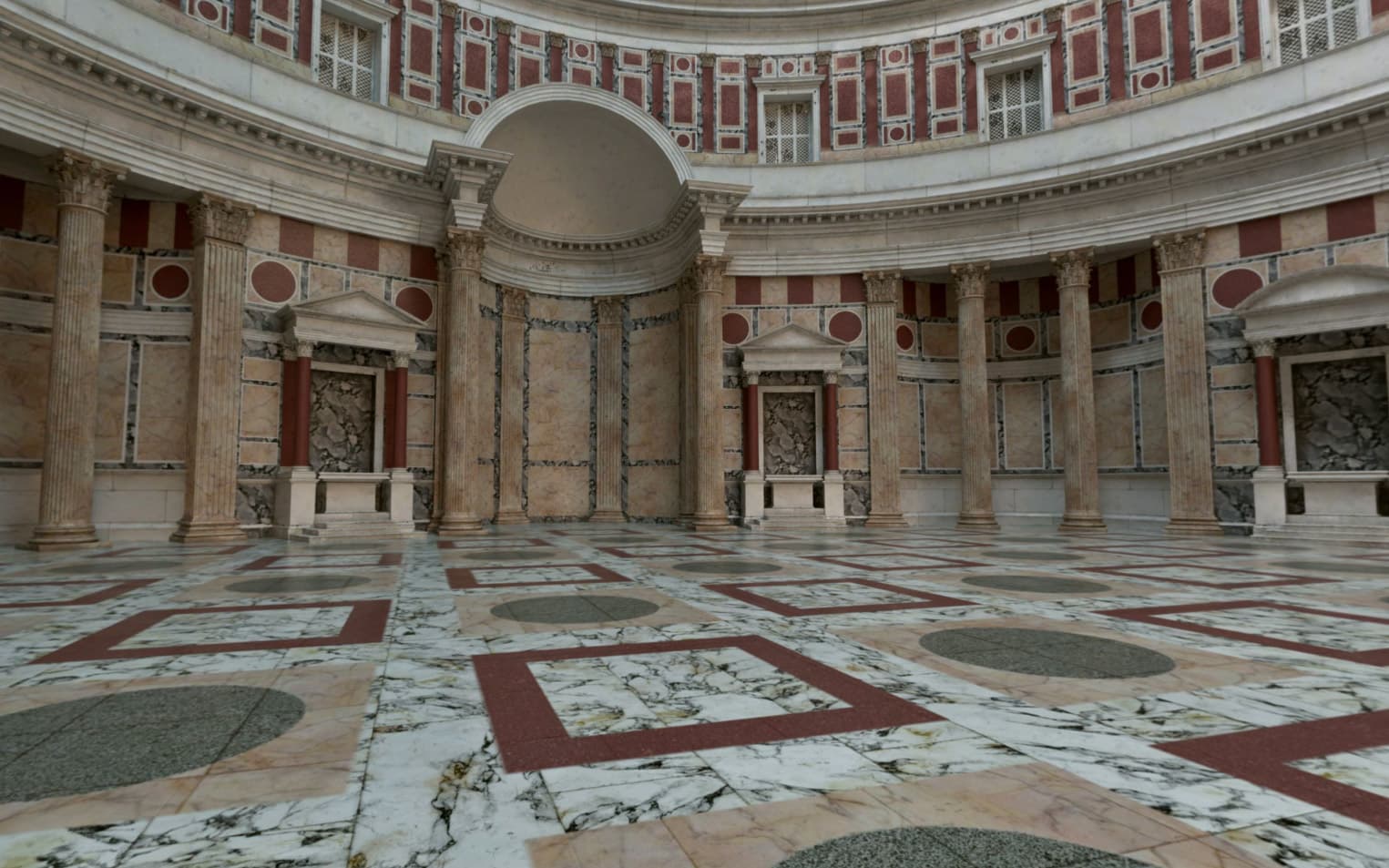
The Pantheon, Rome
The Pantheon's floor is set with Numidian marble — known to the Romans as Giallo Antico — quarried at ancient Simitthus, in what is now Chemtou, Tunisia. Nearly two thousand years later, we still source stone from that same region.
Numidian marble ("Giallo Antico") — quarried at ancient Simitthus, modern Chemtou, Tunisia
See this stone in our collection
United Nations General Assembly Podium
The green stone behind the United Nations General Assembly podium is Verde Antico, a serpentine marble from the Alps — geological kin to our own Verde Serpentino.
Verde Antico — a serpentine marble from the Alps, the same family as our Verde Serpentino
See this stone in our collection
The Colosseum
The Colosseum was built almost entirely from travertine, quarried at Tivoli and carried to Rome across the Tiber — the same stone type, formed the same way in hot mineral springs, that we still supply today.
Roman travertine — quarried at Tivoli, near Rome
See this stone in our collection